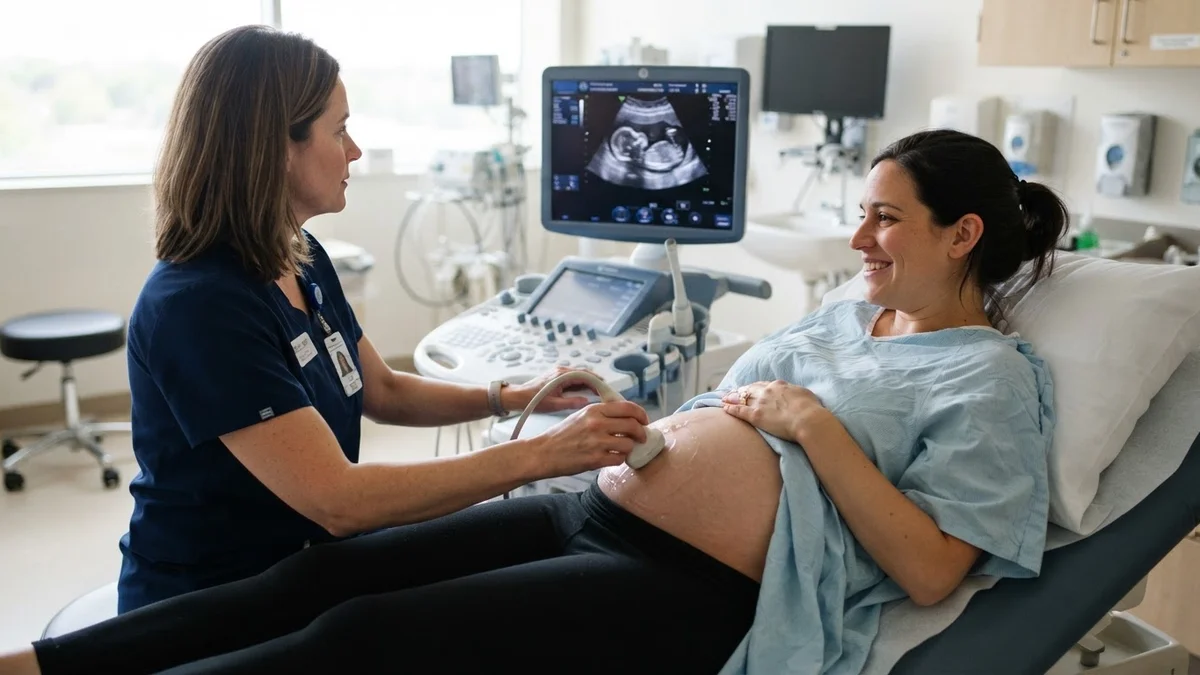
Prenatal (antenatal) care includes regular check-ups, tests and scans that monitor the health of both mother and baby. Exact schedules vary by country, but many tests are similar worldwide.
Routine Checks at Most Visits
- Blood pressure
- Weight
- Urine test for protein and infection
- Baby’s heartbeat and growth (later in pregnancy)
Common Blood Tests
| Test | Purpose |
|---|---|
| Blood group and Rh factor | Identifies if special care is needed for Rh-negative mothers |
| Haemoglobin | Checks for anaemia |
| Infection screening | HIV, hepatitis B, syphilis and others |
| Glucose test | Screens for gestational diabetes, often mid-pregnancy |
| Thyroid tests | In some women or regions |
Ultrasound Scans
- Early or dating scan: confirms pregnancy, due date and number of babies.
- Nuchal translucency scan: around 11–14 weeks, part of screening for chromosomal conditions.
- Anomaly scan: around 18–22 weeks, checks baby’s development.
- Growth scans: later in pregnancy if needed.
Screening vs Diagnostic Tests
Screening tests estimate the chance of certain conditions. If results show a higher chance, diagnostic tests such as amniocentesis may be offered. You can discuss the choices with your doctor or midwife.
Warning Signs to Report Urgently
Contact your healthcare provider immediately for vaginal bleeding, severe headache, vision changes, severe abdominal pain, sudden swelling of the face or hands, leaking fluid, or reduced baby movements.
Conclusion
Prenatal tests help detect problems early and support a healthy pregnancy. Attend all appointments and ask questions about any test you are offered.
Disclaimer: This article is for general information only and is not a substitute for professional medical advice, diagnosis or treatment. Always consult a qualified healthcare provider about your own or your child’s situation.