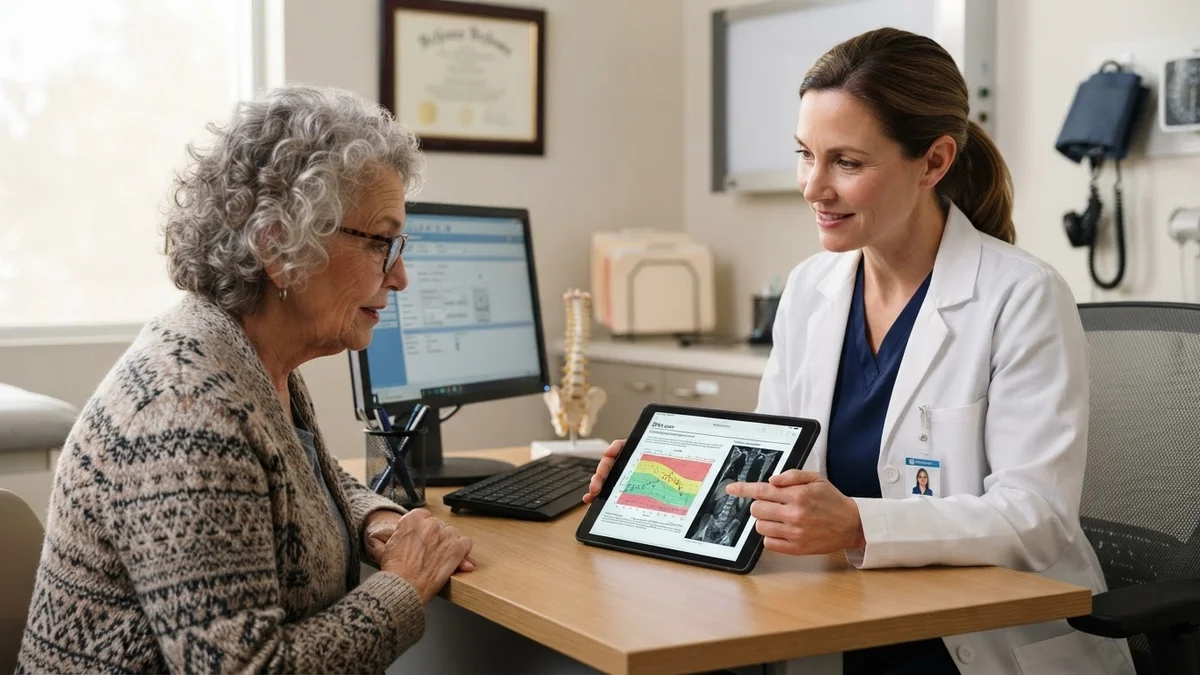
Osteoporosis is a condition in which bones become thin, weak and more likely to break. It often has no symptoms until a fracture occurs, which is why it is sometimes called a “silent disease”. It is most common in older women but also affects men.
Risk Factors
- Age over 50
- Female sex, especially after menopause
- Family history of osteoporosis or hip fracture
- Low body weight
- Smoking and heavy alcohol use
- Long-term use of certain medicines such as steroids
- Low calcium and vitamin D intake
- Lack of weight-bearing exercise
Common Fracture Sites
| Site | Typical cause |
|---|---|
| Wrist | Falling onto an outstretched hand |
| Hip | Falls, especially in older adults |
| Spine | Can occur with minor strain; may cause height loss or a stooped back |
Diagnosis
A bone density scan (DXA) measures bone strength. Results are reported as a T-score, which compares your bone density with that of a healthy young adult.
Prevention and Treatment
- Get enough calcium from dairy, fortified foods, leafy greens and nuts.
- Maintain healthy vitamin D levels through safe sun exposure, diet or supplements if advised.
- Do weight-bearing and muscle-strengthening exercise.
- Avoid smoking and limit alcohol.
- Take bone-strengthening medicines if prescribed.
Preventing Falls
Remove trip hazards at home, use good lighting, wear supportive shoes, and have eyesight checked regularly.
Conclusion
Osteoporosis is preventable and treatable. Building strong bones early and protecting them later in life reduces the risk of painful fractures.
Disclaimer: This article is for general information only and is not a substitute for professional medical advice, diagnosis or treatment. Always consult a qualified healthcare provider about your own or your child’s situation.