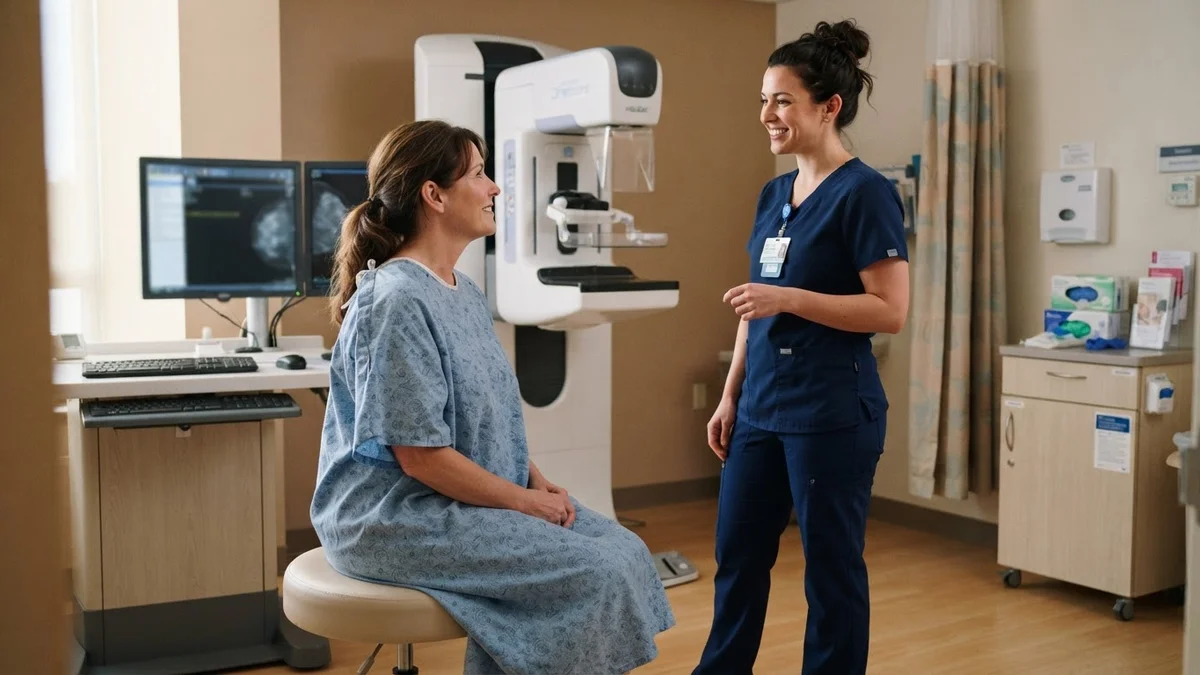
Breast cancer is one of the most common cancers among women worldwide. Finding it early, when it is small and has not spread, greatly improves the chances of successful treatment. Being breast aware and attending screening when invited are two important steps.
What Is Breast Awareness?
Breast awareness means knowing how your breasts normally look and feel, so you can notice changes and report them to a doctor promptly.
Changes to Report to a Doctor
- A new lump or thickening in the breast or armpit
- Change in size or shape of a breast
- Dimpling or puckering of the skin
- Nipple changes, such as turning inward
- Discharge from the nipple
- A rash or redness on the nipple or breast
- Persistent pain in one area
Most breast changes are not cancer, but they should always be checked.
Mammogram Screening
| Aspect | Details |
|---|---|
| What it is | A low-dose X-ray of the breasts |
| Who is invited | Usually women in a set age range, often from 40 or 50; varies by country |
| How often | Every 1–3 years depending on local guidelines |
| What it feels like | Brief pressure or discomfort lasting a few seconds |
Who May Need Earlier Screening?
Women with a strong family history of breast or ovarian cancer, or known genetic changes, should discuss earlier or additional screening with their doctor.
Reducing Risk
- Maintain a healthy weight and stay active.
- Limit alcohol.
- Breastfeeding may lower risk.
- Discuss hormone therapy risks with your doctor.
Conclusion
Know what is normal for you, report changes promptly and attend screening when invited. Early detection saves lives.
Disclaimer: This article is for general information only and is not a substitute for professional medical advice, diagnosis or treatment. Always consult a qualified healthcare provider about your own or your child’s situation.